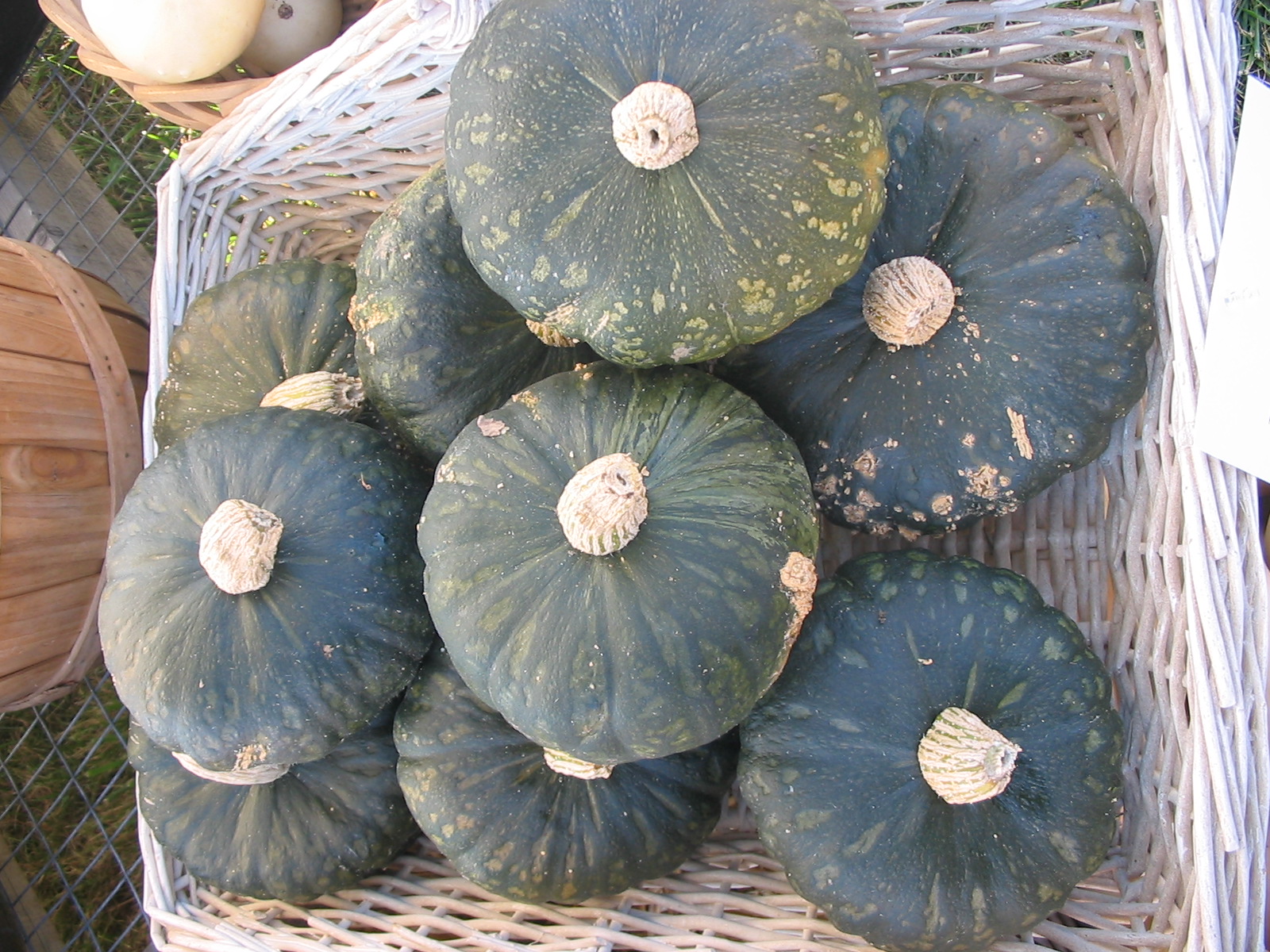
I grew 185# of squash from 3 hills, and I consider a single 20# buttercup to be very successful. What size buttercup do you typically grow?
Thanks for the reply. Where I live, what we call a "buttercup" is a flowering herb, mostly regarded by gardeners as a weed. (I'm sure it may have herbal uses...) At least 90% of gardeners I know try to weed it out. To me 20# means 20 pounds, so I visualized 20# of
that kind of buttercup.
But if you were happy with the result, then I'm glad you got it.

What is your soil situation? In a typical urban yard, in a typical urban neighborhood, I'd not consider HK unless I had a lot of trash wood to get rid of, and I had either an excess of ground water, or not enough water. HK IMO works well with all types of soil...
I'm in a British Columbia mountain-valley upland situation, above the valley bottom land that lies close to the flood plain. The land below ours has a naturally loamy soil, with the typically desirable mineral-soil mixture of clay, silt, sand particles. That makes for a coherent soil (you can squeeze a moist handful and it will hold together).
On the other hand, our higher elevation bench land has almost entirely a sandy or sandy-silty soil, which isn't coherent. The efforts of ourselves in addition to several previous landowners, over a more than 60 years of organic nurturing, has improved the upper layer — but that isn't very deep, and the soil beneath is still "well drained" but incoherent.
Due to the fact that we built the 10"-deep soil in our greenhouse raised beds, the situation in there is very different. We are very experienced organic gardeners, and my characterization of our soil isn't a lament but it is pretty accurate. But I don't mean to say we're reluctant to trying a new technique.
Here's a diagram of what people often get with hugelkultur in this soil type...
I don't doubt your great results, Lazy Gardener. I applaud them.
By the way, what is "buttercup" in your sense of the word?